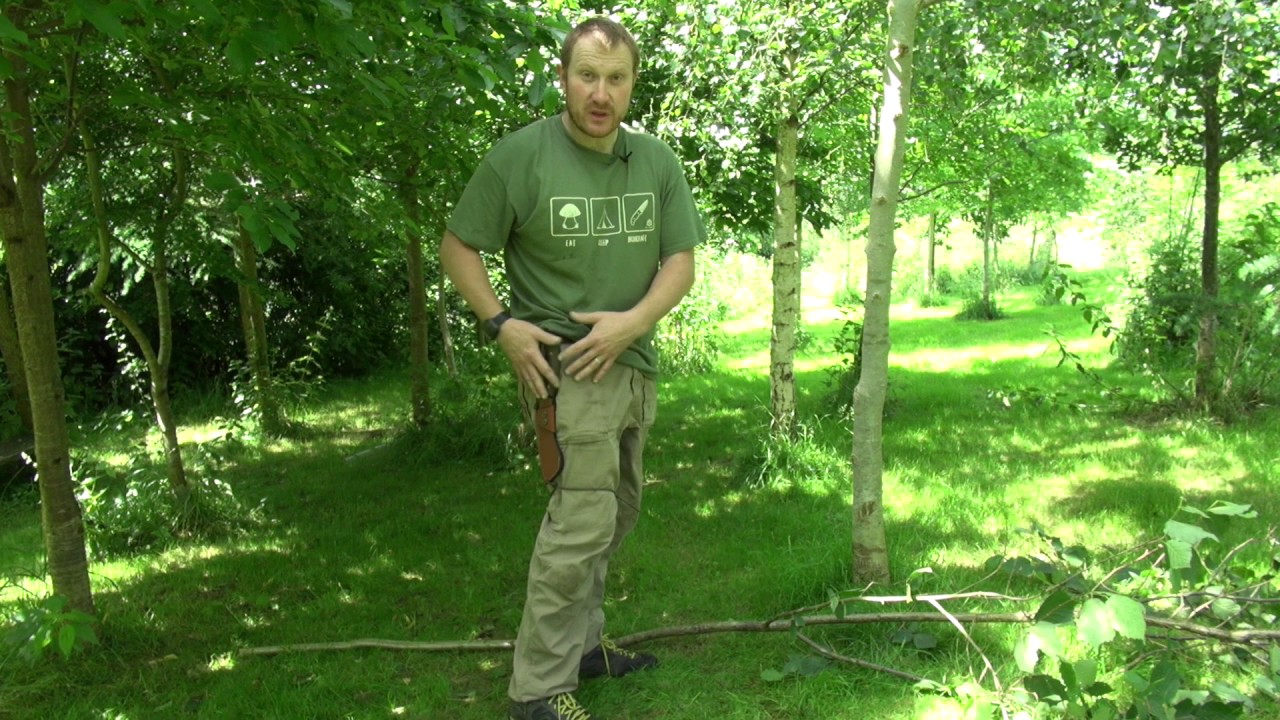
Ben Orford demonstrates an interesting way to sharpen a parang. I think the method would be easy to adapt to sharpening other chopping type hatchets, nata or large sheath knives.
How to Sharpen a Parang
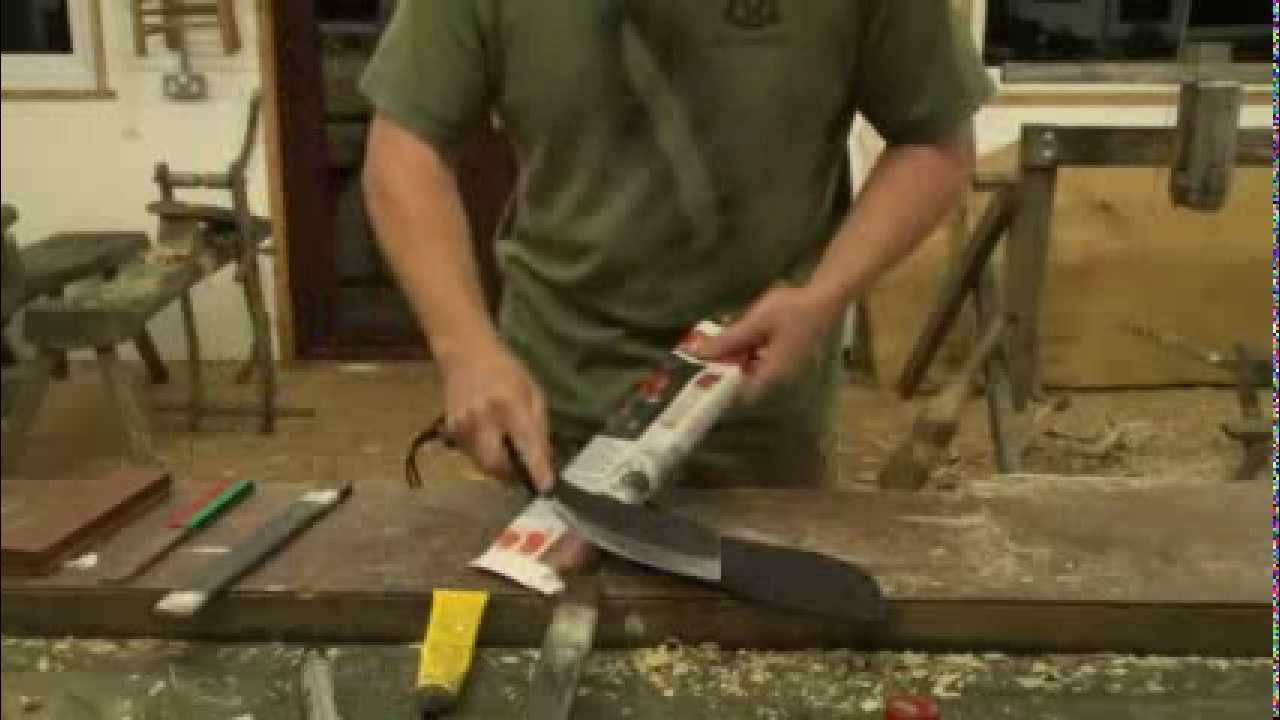
His method using the sandpaper will put a convex bevel on the cutting edges, which in theory makes the edge more durable than a flat bevel. A convex grind is believed to be a more durable edge - especially useful for a chopping tool. Compared to the flat grid or scandi grind. [abbreviated form for Scandinavian grind] Which is a flat or hollow ground edge.
I would put some kind of material under the sandpaper that will compress slightly.
A thin stiff foam works well. Something similar to the foam from a carry out box from a restaurant or foam from a meat container. Or even a thick fuzzy piece of leather. Any material that will compress slightly, but not too much. It will help make the bevel convex because as the edge is dragged along the sandpaper it will be moving in the low part of a shallow wave, thereby creating a rounded shape. vs sharpening on a whetstone, water stone or diamond stone, which creates a flat scandi grind. [virtuovice demonstrates how to make a convex grind while sharpening on water stones, but I think it is a difficult technique to learn]
Ben also did something else to the cutting edge. He explains it well in one of his other videos [posted below] , but it may have gone unnoticed in the above video. What he does on the parangs he makes is sharpen the edge with a convex grid along the part of the edge that will be used for chopping.
But if you listened carefully - he remarked that the last 2 ~ 3 inches of the edge, near the handle, the grind is flat. A scandi grind along that part of the edge. Which is better for fine control cutting / slicing tasks, such as making a feather stick, or other simple cutting tasks.
You may recall seeing in some of the previous videos - showing different techniques or methods to use parangs - they would do fine control slicing cuts with that part of the edge, holding the tool near the junction from handle to blade . I think that is a useful evolved feature. I think it would be easy to create this feature on your own nata, parang or large fixed blade knife by the way you sharpen it. Though it may require a little extra work to change the edge profile.
Ben explains it well in his video for his “Pocket Parang”. Starting about 1:30 into the video.
Pocket Parang