Well be king English is not my language but french is it .
New Caledonia is a French island (279 miles long and 40 miles wide) located in the South Pacific, close to Australia and New Zealand, or about 8,274 miles from Miami.
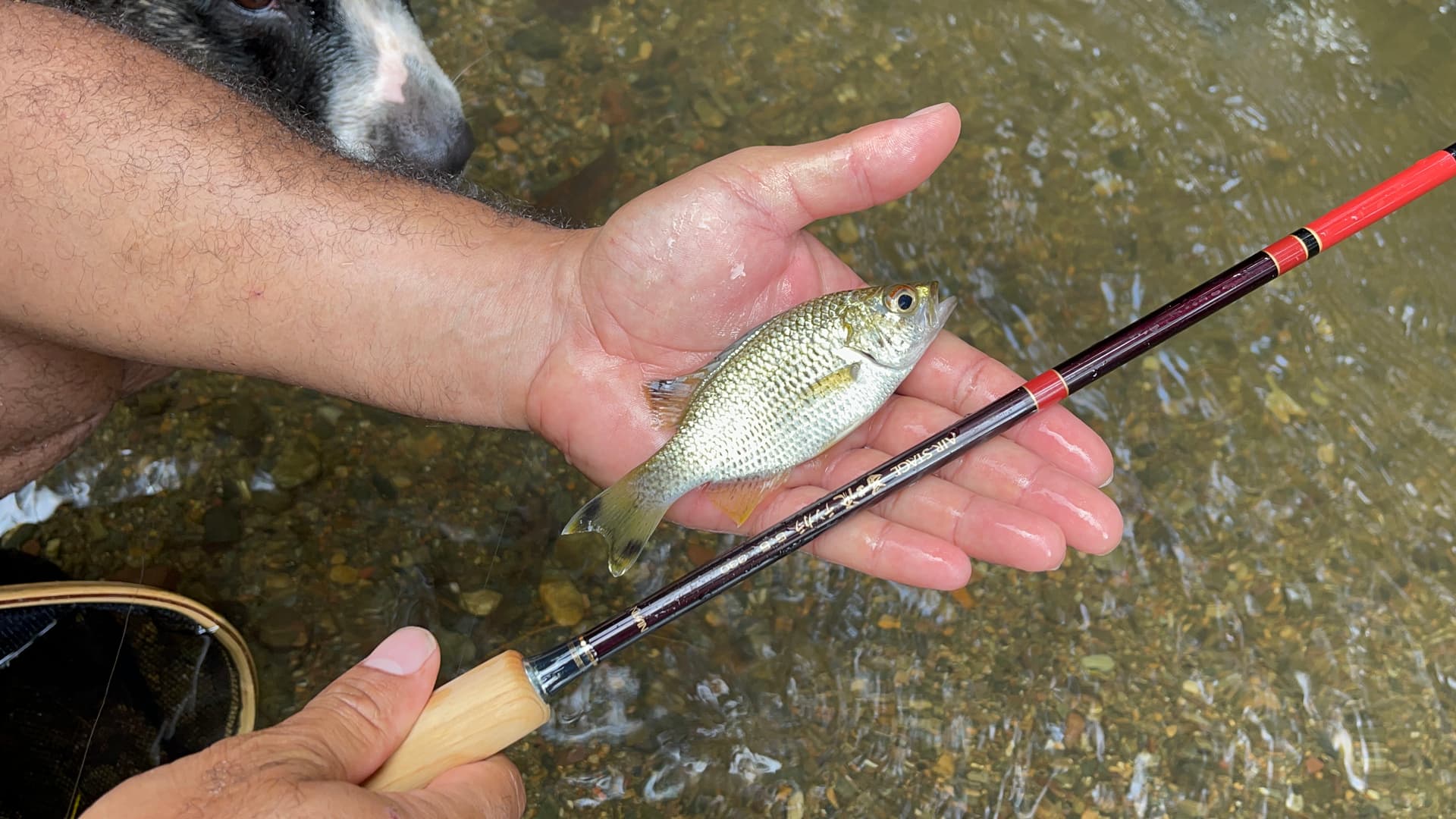
No trout, no salmon, no grayling… in our rivers, creeks, or streams… only jungle perch, tilapia, and a few black bass introduced in a lake, plus koi released into rivers by humans in private locations.
I started Tenkara in 2005 and continue to this day. I am the only one fishing Tenkara in my country! All of my rods, lines, and other gear were ordered from Japan! No Tenkara stuff in our local fishing stores—nothing! Since 2005, I own several rods from Nissin and Shimotsuke, lines… and a Tenkara bamboo rod too, handmade in Japan.
To fish and hook a jungle perch, the first thing you do is find a remote spot far from towns, villages, or humans. If your spot is close to any of these, no fish will take your fly. Jungle perch are shy, smart, and wary. Fortunately, we own land in the middle of the island, surrounded by mountains and crossed by lots of streams and rivers… full of jungle perch.
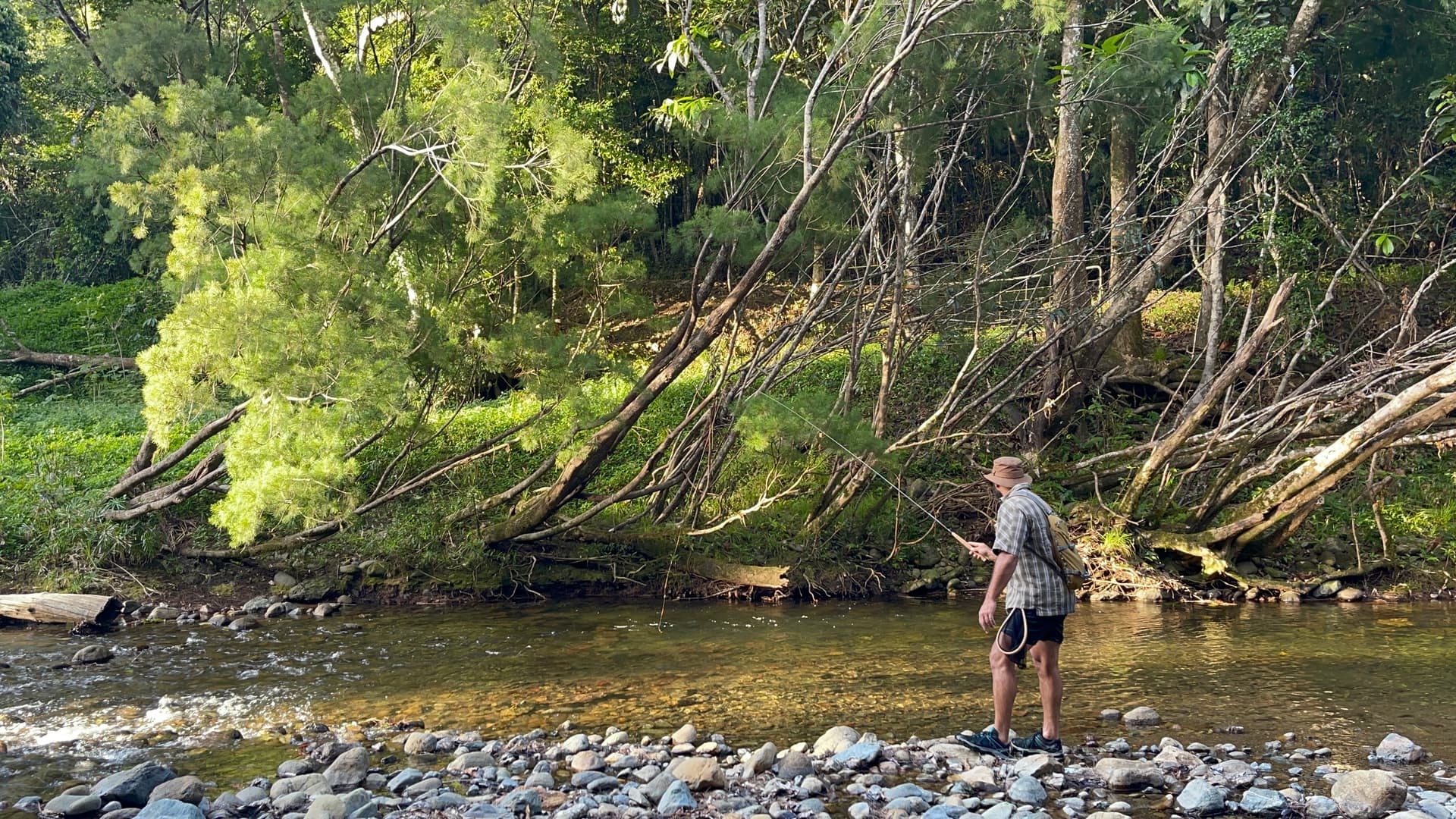
Following the current from the bottom to the top of the stream under the rainforest, I cast my fly everywhere between underwater roots and rocks, hoping to find and catch a jungle perch. If you miss hooking a fish, no other fish in the same place will take your fly! You should walk some yards to find a new place to fish. Fishing jungle perch under the rainforest is easier than fishing it in an open stream. Under the forest, there are lots of shadows you can use to hide yourself.
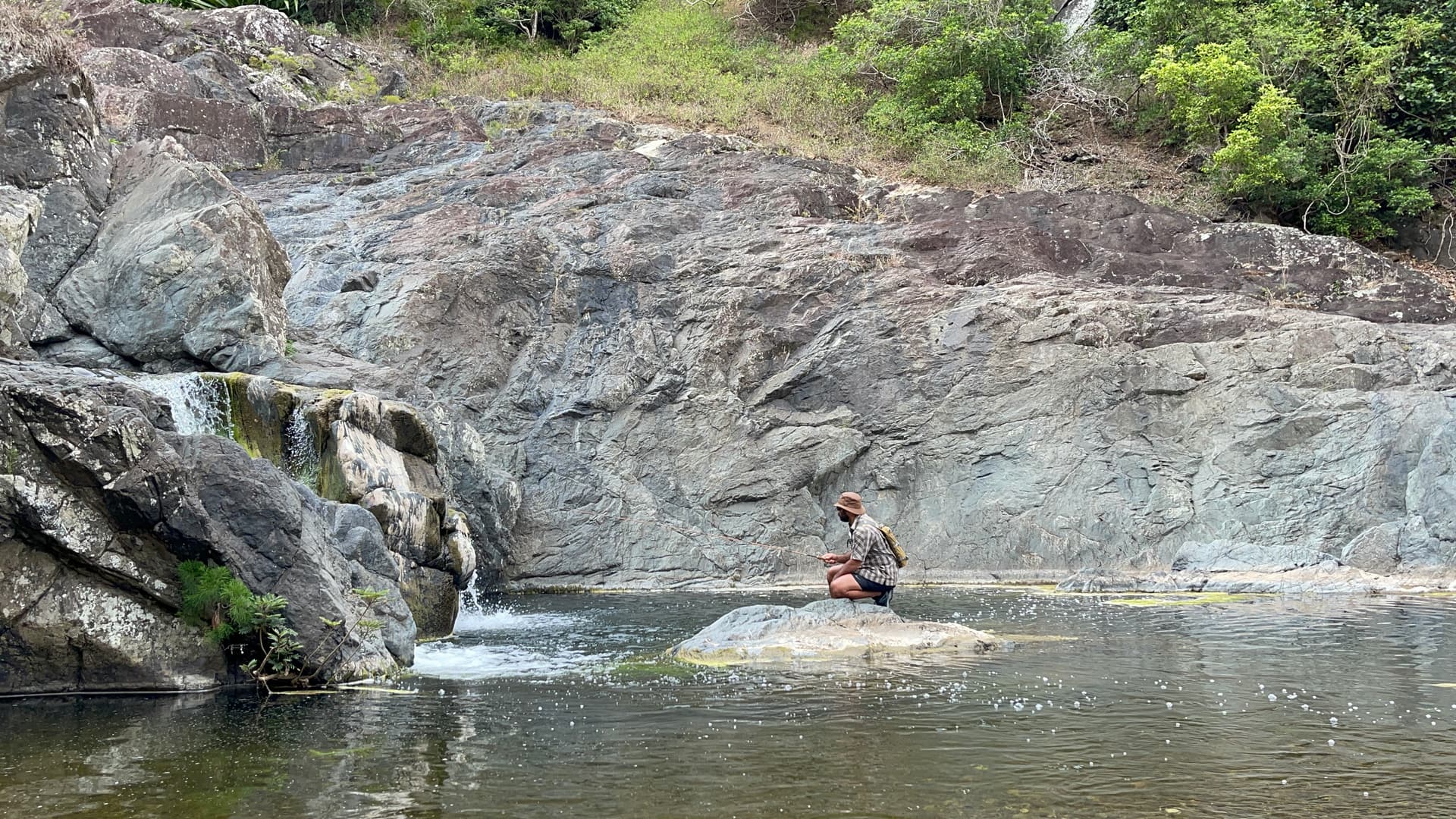
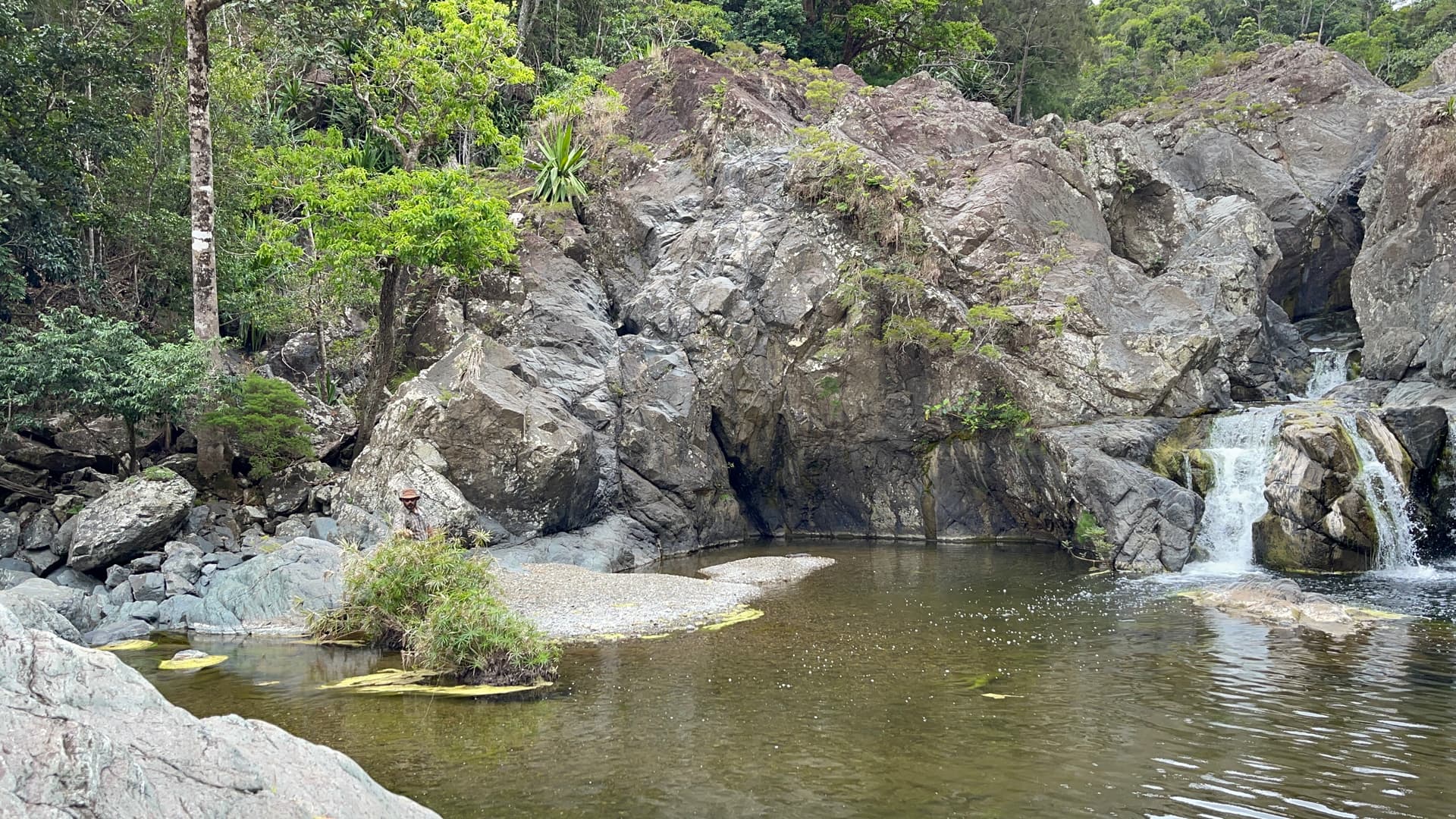
Two different spots where I fish: the first is a stream under the rainforest, and the second is an open stream with rocks that I call “Chaos”.
Chaos contain more big fish than stream under rainforest.
I share few pictures to see what is New Caledonia Tenkara style and the jungle perch.
Thank you so much for putting up this information! It is very encouraging to find out that there still largely unknown fishing resources in the world to discover and fish, even if it is beyond the reach for most to access and enjoy them…Karl.
@Tea_and_Tenkara, The last guy from Wyoming, USA, who told me, “I’ve always wanted to visit New Caledonia,” was invited by me to come and to go trad bow hunting. Since then, he has been coming back to New Caledonia every year, and I welcome him! He has become a great friend.
Haha, it seems the other side of the world isn’t so far away after all. There’s a good chance I’ll be in NZ sometime in the next few years. I’ll give you a ring if I can fold a little side trip into the works. (my profile pic was actually taken in NZ).
Welcome to the forum!
That is a beautiful river. Thank You for sharing.
I have read that New Caledonia is a world class destination for saltwater fly fishing.
Is fly fishing popular for the freshwater fisheries?
Are there any seasons or locations designated “fly fishing only”?
Apparently in NZ “fixed line” fishing (rod, line, artificial fly; no reel, i.e. Tenkara, etc.) is not considered “fly fishing”, but special permits can be obtained enabling fixed line fishing in “fly fishing only” waters.
Is “fixed line” fishing with an artificial fly considered “fly fishing?”
@Brian_Miller ,Yes, New Caledonia is an excellent saltwater fishing destination!
Trolling, casting, fly fishing… you can catch bonefish, giant trevallies (GTs), barracuda, tuna and many other species, both from shore and by boat!
That said, in New Caledonia it’s essential to go with a local guide. The customary owners protect their land and lagoon very strictly and do not allow fishing (or hunting) without their prior approval (“customary green light”).
Fishing rights differ for indigenous peoples and Europeans. Indigenous peoples can fish for any fish anywhere throughout the year. Europeans have a season, protected areas where they cannot fish… and some species are prohibited.
 .
.