Top 3 favourite flies and why? Realistic flies?

I’m trying to build out a beginner’s inventory of flies…just ordered a bunch from DragonTail based on Skiddy Fishing top 5 on YouTube and some dries from Realistic Trout Flies | ReelFlies. The latter have a 15% off Canada Day sale going, with free shipping over $60, so was a good deal for me. I am waiting for ReelFlies to offer a realistic mayfly assortment, but that hasn’t landed yet.

So…two questions:

1 - What are your top 3 favourite/most productive flies and why?

2 - What do you think of the realistic flies concept? Will fish be able to tell the difference? Best thing since sliced bread or marketing hype? Here is an example: Realistic Adams Dry Fly | ReelFlies

Not trying to start a religious war here…just curious what people like and have success with, trying to learn.

Thanks!

  1. My most productive changes by water type. My main river has sparse hatches and few risers so dredge nymphing is the name of the game. For that I like a size 16 jig hook perdigon, usually in green. For traditional tenkara, I like to use a grizzly hen hackle and the Shetland’s Grouse yarn for a body, tied so that the hackle is not too extremely reversed. It’s easy to tie and see for me, and I like grouse hunting which is why I ordered the yarn in the first place. If reminds me a bit of dark pheasant tail. For fishing dries I like hoppers because they’re easy to see and don’t usually use rooster hackle which is expensive, plus the fish demolish them.
  2. Daniel Galhardo had an interview with Morgan Lyle, author of Simple Flies. I think realistic flies are for the tyer and artistic purposes, but don’t do much for fishing. Fish don’t have great eyes to begin with which is why impressionistic flies fork, too! As Morgan put it, fish take the fly that looks like it could be a mayfly, not the fly that looks like a statue of a mayfly. I’d rather have movement than exact detail, so that “life” is communicated to the fish.
2 Likes

I’m throwing a lot of variations of the Killer Bugger. It’s my top pick in recent years.

2 Likes

The last several years, i only fish a futsu style fly in different sizes and colors. I feel I hold my own with this one pattern.

There are times when I strike out but I feel it is liberating and forces me to focus on presentation.

1 Like

I have some patterns that just seem to work everywhere. I won’t list specific names but general characteristics.

I"ll start by saying I love the versatility of wet flies. I can keep them near the surface or use the current to drive them deeper.

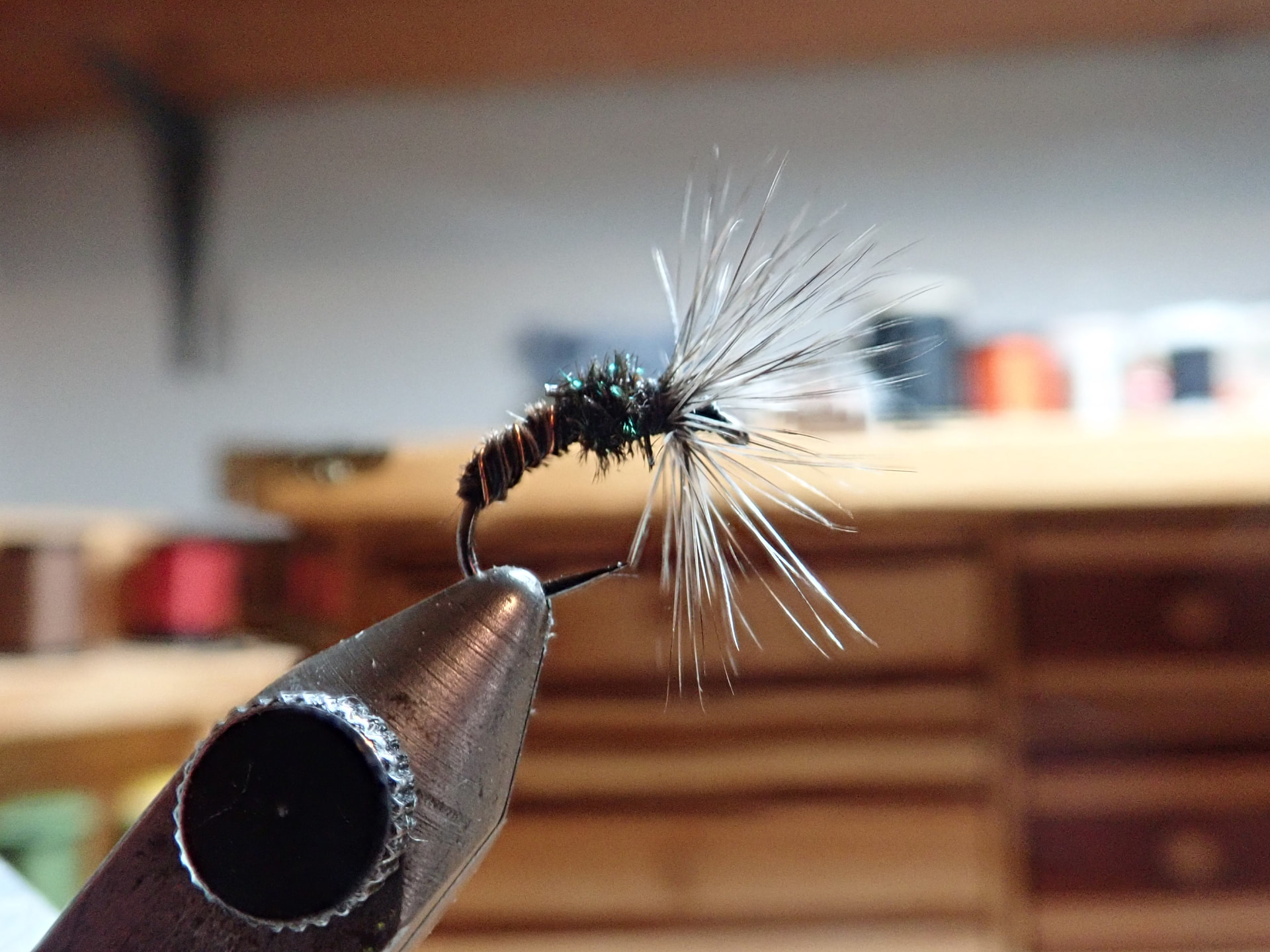
I like the Takayama forward facing hackle profile because it compliments manipulation techniques that have produced some very nice fish for me.

Speaking of hackle. Fish seem to like flies with variegated hackle like Grizzly, Guinea Hen, Badger, Pheasant Rump. Grouse… I think perhaps they suggest movement even when still. And subtle movement seems to attract strikes.

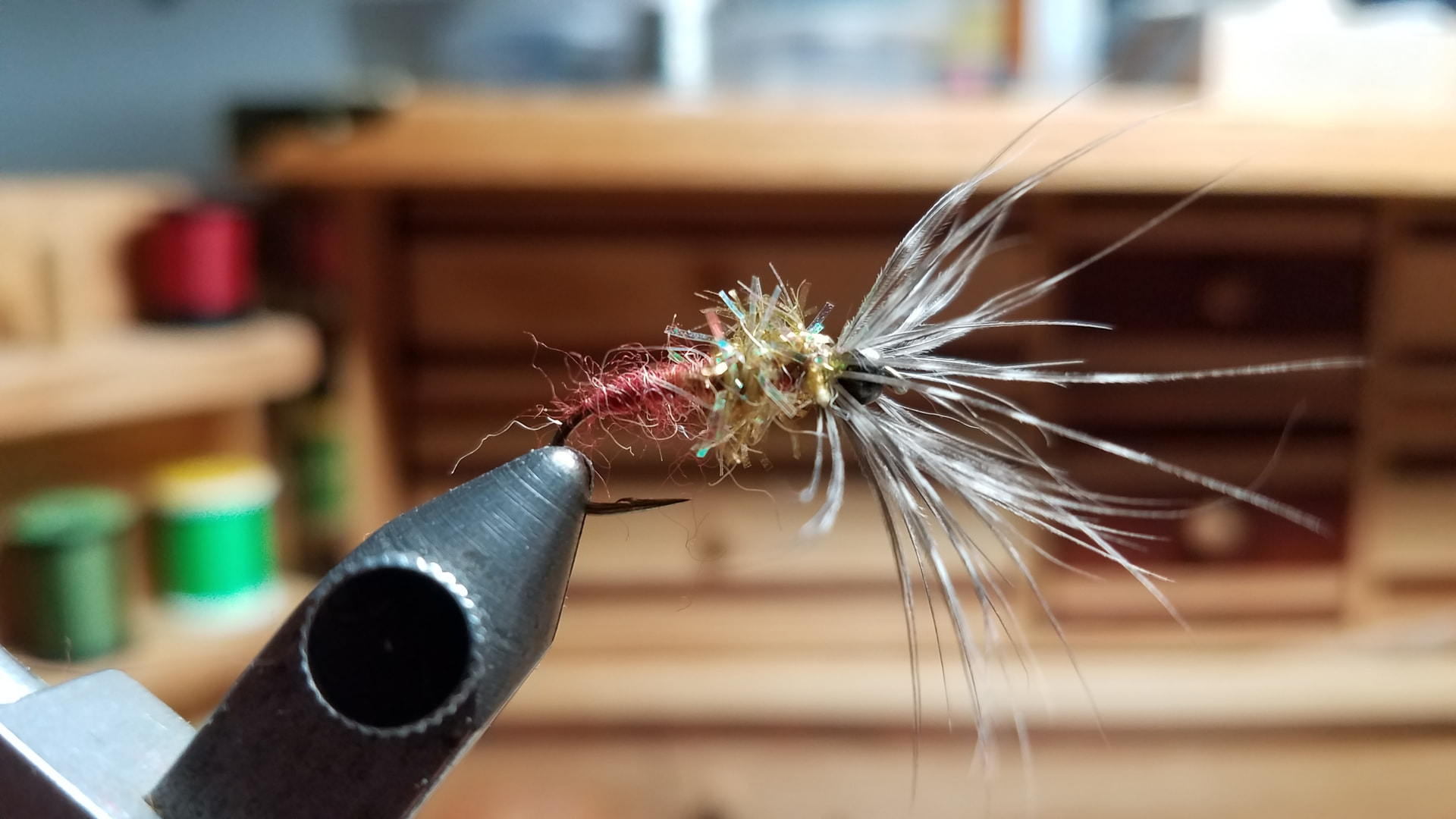
And while I am on the subject of materials, there are a couple of body materials that just always seem to attract fish. Pheasant Tail, and Peacock Herl look buggy and the holographic nature of the herl colors looks buggy and may suggest movement. But they are fragile. Reinforced with 0.15mm copper wire suggests segmentation. As they get chewed up, the fibers will break and stick out of the wire and thread windings and seem to attract more strikes as they wear. Herl spun onto black tying thread also gives added durability.

There are some modern synthetic materials such as Olive Ice dubbing that mimic the colors and flash of Peacock Herl but is very durable. As it wears tiny fibers begin to stick out that may appear more lifelike and they seem to attract more fish as they get worn. Pheasant Tail bodies with Herl or Olive Ice dubbing for a thorax is a combination that my logs show has has fooled over twice as many fish as any other pattern I use.

Another body material that has worked well for me is a discontinued synthetic knitting yarn named Dazzleaire. It has clear nylon filaments spun into the colored yarn that give sweaters and other items a flashy fuzzy appearance when its picked out. I have a friend who always seems to have her knitting bag with her said it was terrible to knit with. I picked up a grab bag with a lifetime supply of skeins cheap while visiting a quilt shop with my wife. The shop owner had an unused stash in her attic and had her husband bring it into the shop for me. I pulled out what I could use and took the remaining yarn to a fly club meeting to give it away.

Speaking of quilt and knitting shops there are “boa” yarns that have filaments like marabou, and others that have holographic filaments spun into them that are fun to use and catch fish. And my wife has told me that she’ll stand there waiting for someone to help her as she watches one and sometimes two employees walking around with me helping me find unusual and cool fly tying materials and thread!

Oh, and hooks… curved heavy wire scud and light wire Klink hooks also suggest movement to me, and might to the fish too!

Finally, I often use peacock green holographic and gold glitter nail polishes as head cement for subtle flashy highlights. It can be very effective on beadhead nymphs.
2 Likes

Oh, and about the (Takayama) Sakasa reverse (forward facing) hackle profile, I forgot to mention…

I had been using it in saltwater too with my 9 1/2 ft 6 weight beach rod and reel, and compact shooting head lines for a few years prior to fishing with a fixed line rod.

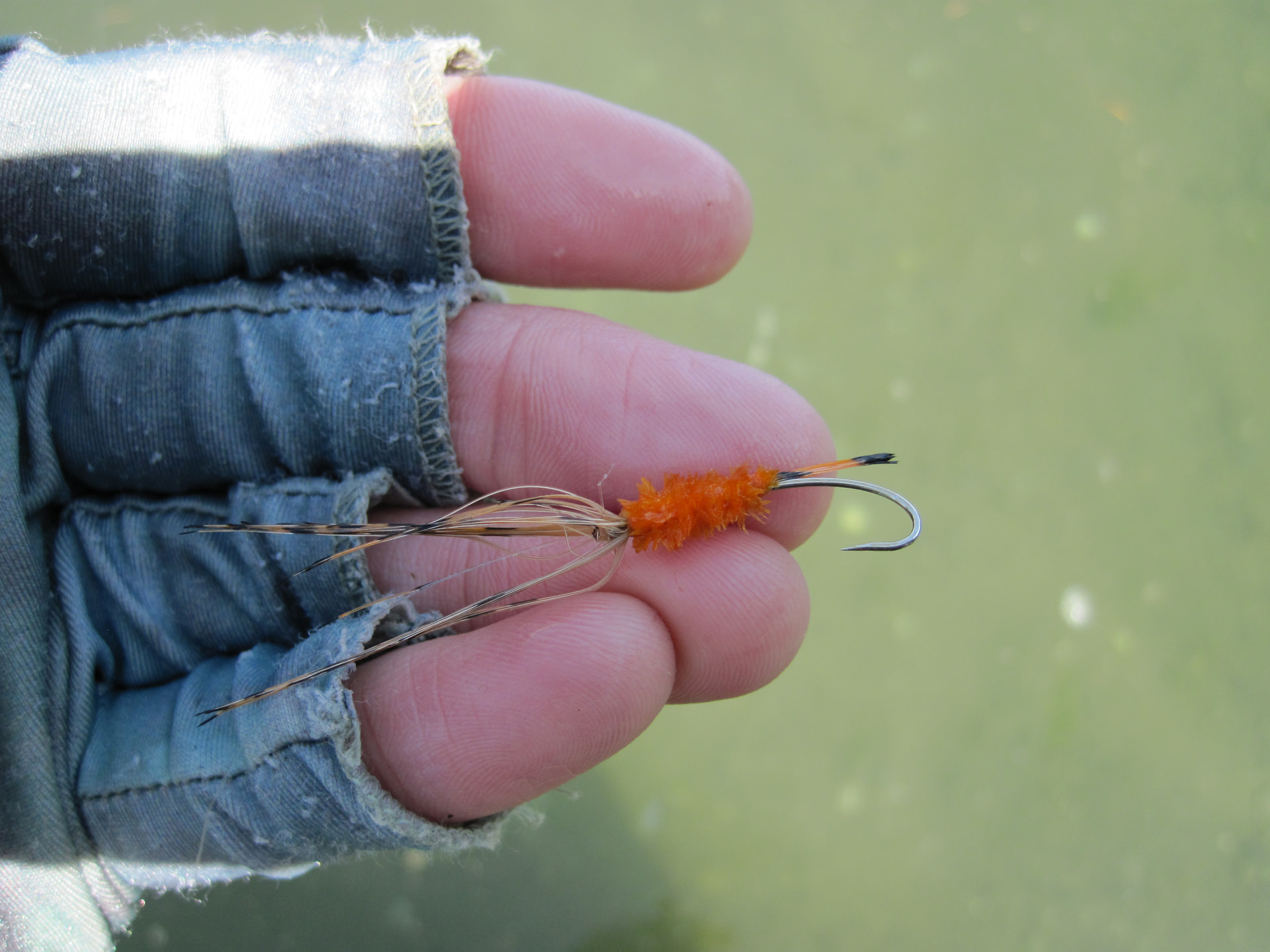
Unless I spot baitfish or shrimp in the shallows this pattern is often the first fly out of my box for Sea Run Cutthroat in the salt. I had used it for a number of years prior to using a fixed line rod. It has a medium yellowish orange chenille and a rather longish reverse Golden Pheasant hackle and tail. I think it may resemble a small Pacific coast (California market) squid (Loligo opalescens).

BTW, I had tried to use a lightly weighted version of this normally unweighted fly overhead casting my 5.3 meter Keiryu rod with a 10 meter tapered line side by side with my western beach rod and intermediate shooing head line. Using the K-Rod was simply frustrating. I couldn’t reach the structure holding fish and get hookups I could easily get to using a double haul with the western beach rod. I was as far out as I could get in the tide, but the fly was still occasionally hitting the seawall and high bank on the back cast, and the tapered line kept piling up short in the steady onshore wind. :confounded_face:

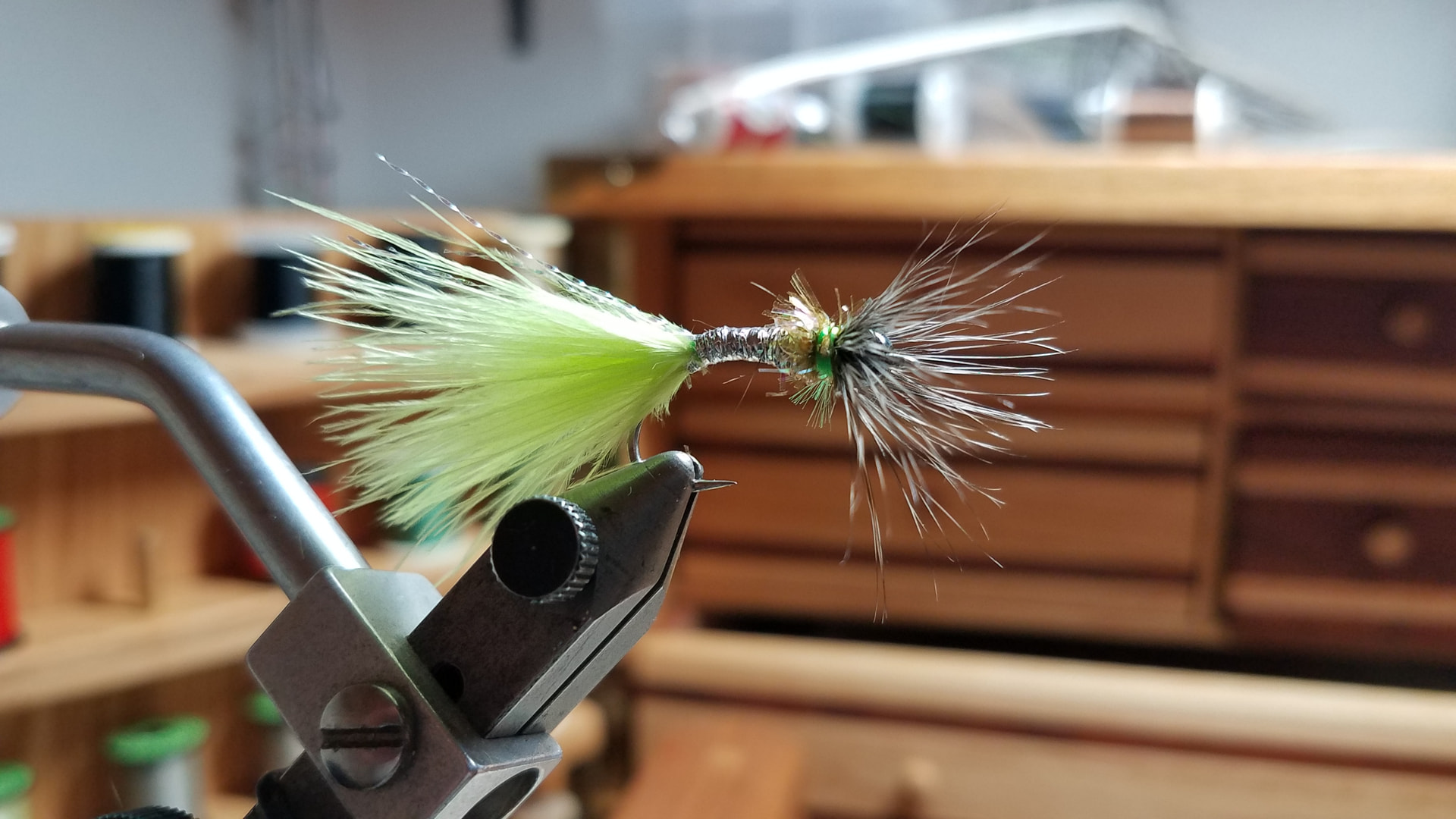
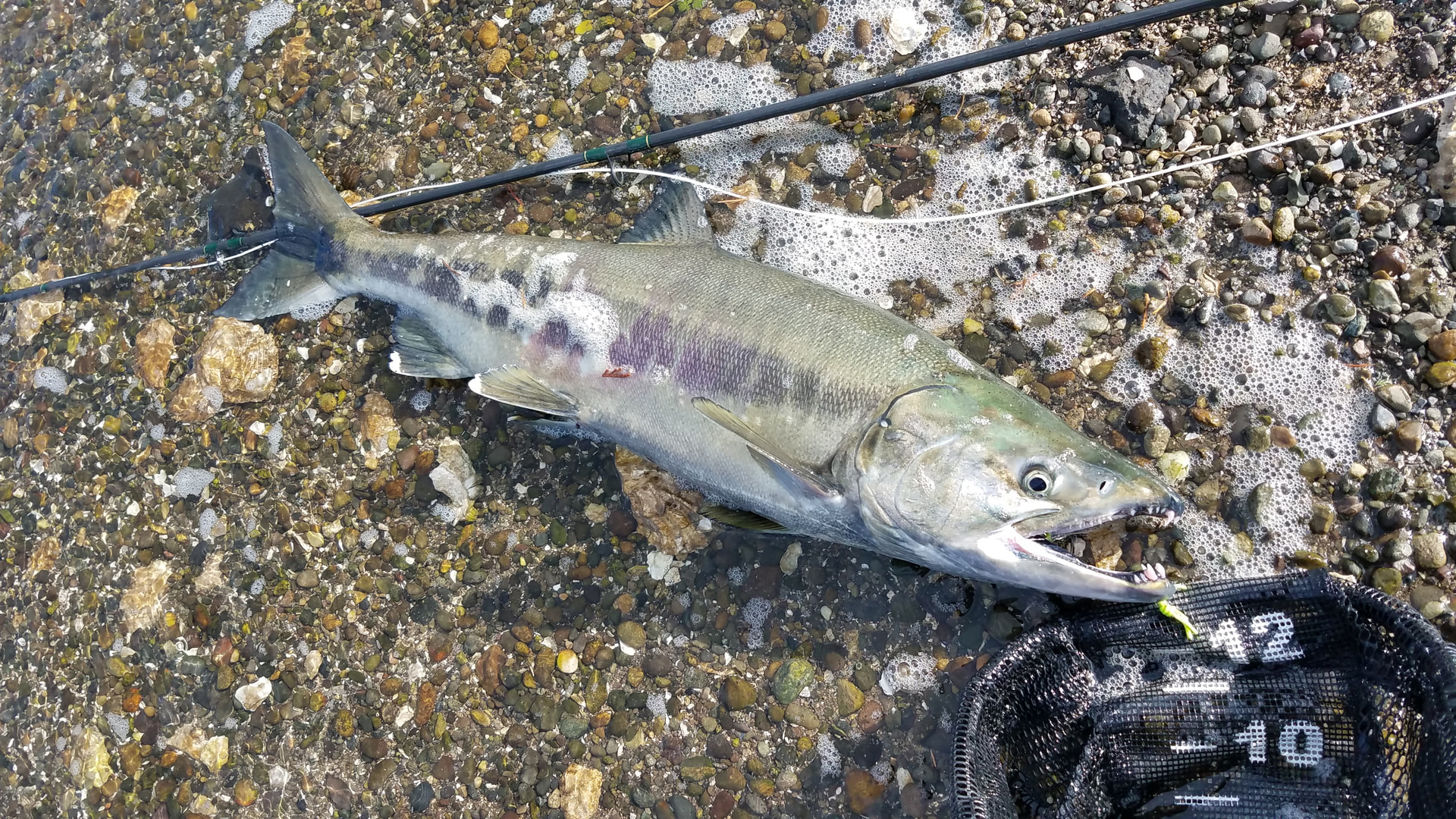
The reverse hackle profile has also worked for Chum Salmon. They are also called “Dog Salmon”, with big canine-like teeth, known for being “tackle busters”. The best rod to use is a 9’ to 91/2’ 8-weight or 9-weight. I had heard that putting a big lime green fly in front of their imposing mug as they near their natal stream or in freshwater on the way to their spawn will elicit savage strikes out of pure spite. The 1st time I fished for Chums was with my saltwater mentor after my 1st and very productive year of Tenkara stream fishing. I chose to use a big beadhead Sakasa fly with a lime green marabou tail on a #6 saltwater hook with a black and white Griz hen hackle instead of a big polychaete worm and bunny baitfish imitations he offered me.

Trout and Salmon seem to like the Sakasa profile.

Please excuse my rambling on about the reverse hackle Sakasa…

This is my “confidence”, “searching” fly. Well over twice as many fish as any other fly I have used with any type of rod; literally hundreds of fish.

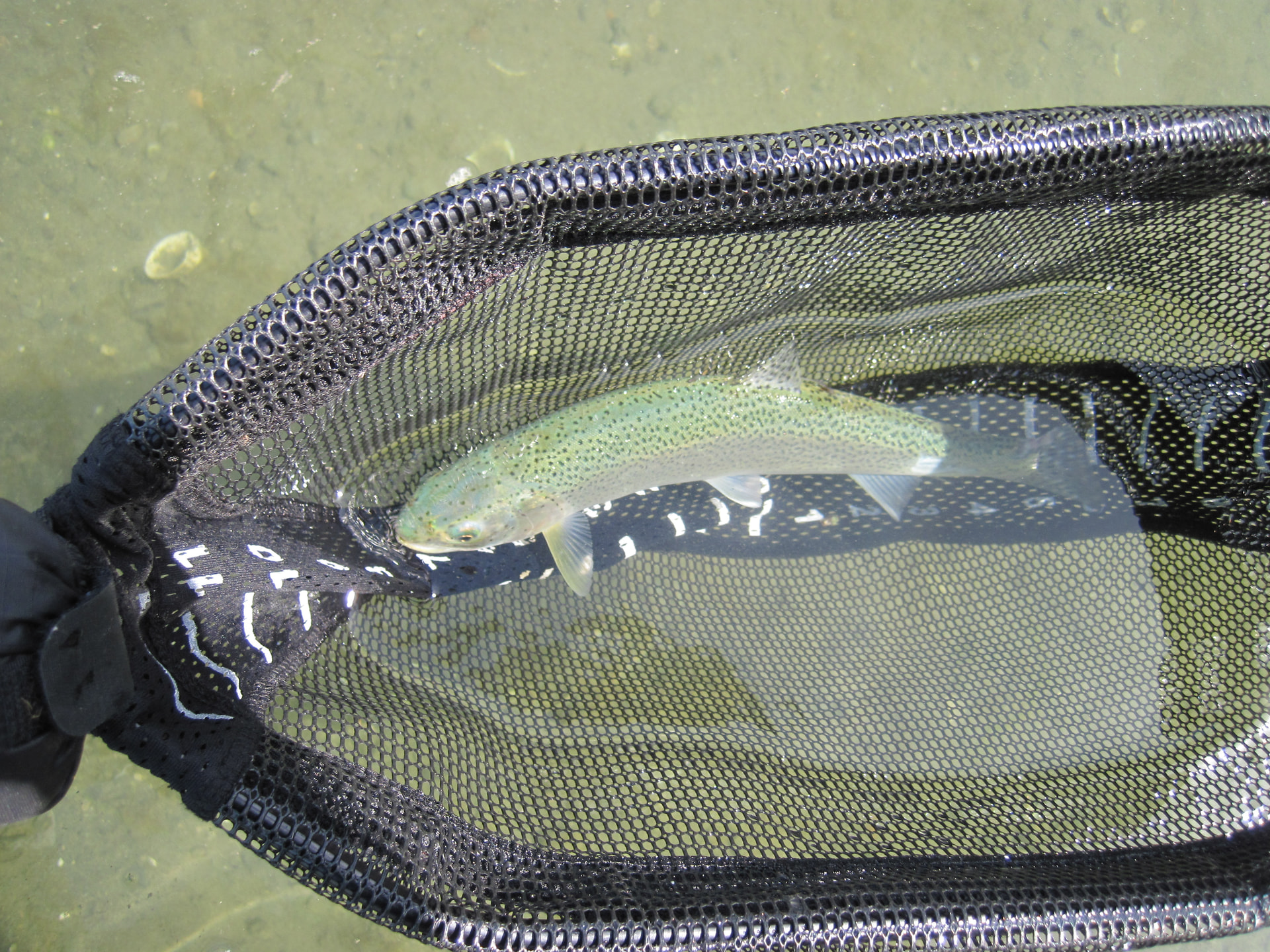
This beadhead reverse hackle fly with a Dazzleaire yarn body managed to fool my 2nd fish on a T-rod which up to that time was the biggest fish I had ever caught in a small local river I had fished for ~10 years with a fly rod and reel.

2 Likes

I’ve been liking the Ryuta Kebari: https://www.youtube.com/watch?v=nFPlnwYLuYw
Especially on smaller streams it seems to be very effective. Of course on small streams that don’t get a lot of pressure it seems like a wide variety of flies will work.