A March 25, 2018 post on a website for the 石川県白山白峰漁業協同組合, Ishikawa Prefecture Hakusan Shiramine Fishery Cooperative Association. (my best shot at correct translation)
I think Hakusan is a city, within the Ishikawa Prefecture that was created by the merging of several other villages including the former village of Shiramine. Located on the opposite side of Honshu from Tokyo. A bit north west of Tokyo.
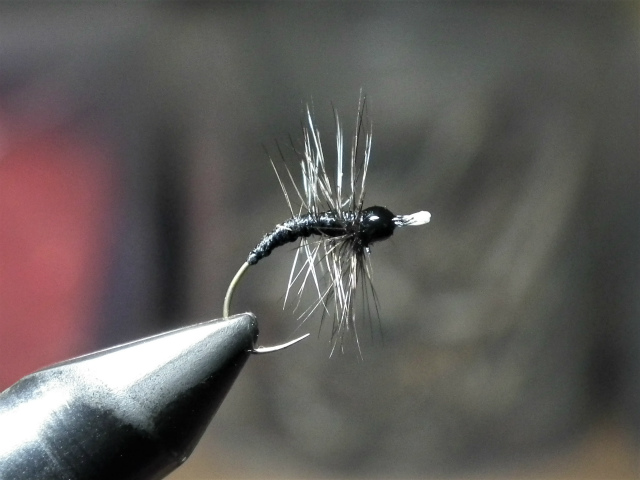
The post describes a kebari from the area made using a traditional technique from the region that are being made for sale to preserve the inherited traditional method of tying them.
Two names are used:
「白山テンカラ毛ばり」`Hakusan Tenkara ke-bari’
「白峰固有の毛針を」Shiramine specific kebari.
It is described as being for tenkara fishing, but smaller than the normal tenkara kebari, using soft hair (hackle ?) and some phrase that translates as “using less oil” that I haven’t had success thus far finding a correct translation. [油分が少なく, yubun ga sukunaku, low oil content or less oil] A mystery.
And thus far no success finding an online picture of these kebari. Only the following two websites.
テンカラ釣り用 伝統技法で毛針
Kebari by traditional technique for tenkara fishing
白山白峰漁協 Hakusan Shiramine Fishery Cooperative
asagaotv.ne.jp Traditional technique kebari for tenkara fishing
The price is ¥ 350 for one bottle and ¥ 1,000 for three bottles.
And another blog post with essentially the same title
テンカラ釣り用 伝統技法で毛針 traditional technique kebari for tenkara fishing.
That has no description, mostly only a photo of the same newspaper story announcing the launch of the kebari for sale by the Hakusan Shiramine Fishery Cooperative.
http://blog.kan-hakusan.jp/?eid=357
If anyone finds a picture of a 白山テンカラ毛鉤を Hakusan Tenkara kebari , please post it here.
I can barely see well enough anymore to tie size 14 kebari, hopefully they’re no smaller than that for me to try tying one. But maybe they are difficult to tie. The first blog post also states only a few people can tie them. But it wasn’t clear if that was due to lack of skill, or only a few people within the group available to tie them. Offering them for sale seemed to be a combination of wanting to preserve the traditional kebari pattern, and maybe a fund raiser for the fishery cooperative.