Under what circumstances are artificial, soft-plastic baits preferable over comparable flies, eg when might one prefer an artificial soft-plastic mayfly nymph vs a tied fly equivalent? I’m new to fishing and have both a tenkara and keiryu rod at my disposal. To some degree I imagine weight/size is a factor, but streamers can be quite large/heavy and seem to be utilized effectively with either style of rod. Does it all just come down to stylistic preference, or are there other factors at play?
I know that, traditionally, live bait is used, and that it’s likely more effective than either flies or soft-plastics. What I’m unsure of is how anglers decide which to use when live bait is unavailable, for whatever reason.
I can’t really speak to injection molded versions of fly patterns if that’s what you’re asking about. To my knowledge, they work like tied flies.
The main thing you’re optimizing for with fly fishing lures is weight. Unlike other casting techniques, where you’re cast the weight of the lure, in fly fishing you’re casting the weight of the line.
The light and precise cast of a Tenkara rod breaks down if the fly (or lure) is heavy. I happily toss the occasional heavy lure (e.g. a 0.5g spoon, split shot) on my T-rod, but I’m mostly doing so because the T-rod is what I have in my hands in that moment. It’s otherwise a major disadvantage to lob heavy tackle into a moving creek on a fixed line rod.
Perhaps bait is better, but it’s somewhat hard to compare, since it requires a different cast. During a typical Tenkara cast, the lure experience high acceleration (or so I assume). This will generally thrash a poorly tied fly or rip a soft bodied bait. A gentle Keiryu cast is ideal for bait. I usually run flies with my Keiryu rods, which lets me use a really aggressive two-handed Tenkara-like cast to get the lure way out there.
Different rods, techniques, lurs, and water. You can misalign these, take an efficiency hit, and still have a blast. It’s really up to you.
Thanks for the reply. And yes to be more specific I’m referring to weighted casting. What makes someone choose for example a weighted nymph over a soft plastic? I just don’t quite understand. To me they seem roughly interchangeable, yet I see almost no one in tenkara or keiryu fishing with them.
I wanted to head out to the coast to try and fish the surf, and to me bringing soft plastics over flies made more sense intuitively (live foraged bait would my first choice, but I want to bring lures as backup). Maybe because it cuts the wind better than a fly, with simpler rigging? I’m just not sure what sort of alignment between the rods, techniques, lures and water makes one prefer weighted flies over soft plastics, or vice versa.
I suppose you could also look at it from a weight and density view.
Flies are generally really light for their size, so they can be cast on fly fishing gear. Weighted flies are dense, so they sink, but they’re also still pretty light.
Other types of lures are much heavier, even when they’re the same size as a fly.
A Tenkara rod is going to comfortably cast, maybe, 0.2 grams. Ultralight spinning gear is going to easily cast up to 5 g. A Keiryu rod could probably do the same (5 g), so soft plastics would be a comfortable here.
That just how I think of it. You could always try it out and see what works for your conditions.
Yeah it’s the keiryu rod where I’d consider the soft plastics. Since they’re made to cast live bait, I’d assume soft plastic is no problem. But I was then led to my question of why I’d do that over a weighted fly or nymphing setup in that case.
I don’t currently own any soft plastics, for what it’s worth. I was shopping for artificial sand fleas when I had asked myself ‘why not a sand flea fly’ and I’ve since been stuck on when, all else equal, one would grab the plastics over the fly for various scenarios. Does a Berkley worm have any place in a keiryu fisher’s tackle box?
Howdy! From your replies it sounds like you fish salt water? I fish for trout in rivers primarily so take what I say with a grain of salt.
I use live bait, flies, and some soft plastics with my keiryu rod. I prefer live bait, but if I don’t have worms available I often choose by how much weight I need. I fish some really heavy rigs sometimes for fishing small yet deep (7’-11’ deep) and often use a 1/64oz jig head and grub. If I had to use a fly I’d use a heavy stonefly nymph or worm since those can be heavily weighted. I do like how flies can be tied though, and I already tie for tenkara fishing so some tungsten beads go a long way for making keiryu weighted flies.
I have not yet fished saltwater actually but plan to once my car is fixed up and I can get out there. It’s something I’ve wanted to get into for awhile but was turned off by the saltwater fly rod costs (and the overall price tag to buy into fly fishing), so I’ve been thankful to learn about keiryu lately.
I think you’re right that it does come down to weight. I’d prefer live bait too but began shopping for soft plastics thinking it’d be good to have plastic crabs or sand fleas as backups in the event I got skunked while foraging for them. But, interestingly, I couldn’t really find any evidence of anyone fishing keiryu with soft plastics. It seemed natural to me that if keiryu was made for live bait, then you might swap that out for plastics, so the lack of anyone doing this was kind of weird to me. But I suppose the action is completely different between live and artificial (..but that’s true for flies too). And because you can just add weight to flies, there’s seemingly a lot of overlap in utility between the two.
IDK, I guess it’s just been confusing to me since there doesn’t seem to be a clear rule where plastics are more suitable than (weighted) flies, yet keiryu only seems to see bait or weighted flies being used. So I felt like I might’ve been missing something. I think ultimately it might just be one of those things you have to screw around with yourself to see what you like. Lol. Part of this quest for me is owning as little as possible and picking up plastics seems almost like opening pandoras box. So far I’ve really enjoyed just having a fly box and line cards.
In my early years of fixed line fishing I found it so effective for streams that I wanted to see how it would do for lakes and saltwater. I fish for Salmon and Sea Run Cutthroat Trout from the beach in a saltwater “Sound” that is similar to a “Fjord” but generally wider. I use two different western rods depending on what I am targeting. The beaches near me are flats. The inshore “Sound” "surf " is generally wind driven waves or wakes from commercial shipping. But there are strong tides and I like to fish in 8 foot to 12 foot tides where there is a lot of tidal current running parallel to the beach at speeds of ~3-5 knots that moves my fly along like a river allowing me to cover a lot of water per cast. I cast 60’ to 80’, generally in a moderate onshore breeze and strip strip strip strip… All the while the fly is also moving parallel to the beach. If I don’t see a “follow” I stop a little bit past the end of the running line, with a 30’ - 33’ compact shooting head out and recast.
I found trying to use a K-rod and a rather heavy 30’ tapered line side by side against my western “beach rod” and an intermediate or full sink line with the shooting head rather disappointing for inshore salt beaches near me for several reasons. I did a long post about it here. *adding There are a couple of follow-up posts that give some additional insights into fishing the salt.
I found that actual local “Coastal” waters near where I live and in places like Hawaii where there is real “surf” are a whole different game of sight casting to fish or blind casting as far as I can into what is usually a strong onshore breeze and strip strip strip… straight back. Fishing rip currents (fixed line=short casting distance… be careful wading!) that can move the fly and (jigging) off jettys (again be careful in high surf) might be productive.
In summary, fixed line fishing in streams has the advantage of current to move the fly through the water. Karin Miller and her Zen Tenkara Customers would probably disagree but IMHO that’s where the real strength of fixed line rods is.
You make some interesting points. Functionally, plastics and flies are very similar. I’ve seen mayfly nymph soft plastics, hellgrammite soft plastics, etc. for trout fishing that I’m sure work great. I think another (and main for me) consideration is availability. I can dig worms from my garden or buy them from the closest gas station. I can tie flies or buy them from a fly shop.
Nowhere I know of in Boise sells tiny soft plastics that would be suitable for keiryu, they’re more for jigging, bass, and ice fishing. If I could make my own soft plastic nymphs or buy them readily besides online retailers I would. I like bait fishing more than fly fishing with keiryu, so I bet I’d like soft plastics more than flies on keiryu.
One last bit that turns me off of plastics is the sustainability portion. Yes, I lose split shot and line. Hooks rust away and bait gets eaten and natural fibers return to nature. Soft plastics are just adding more trash to the water though, if they’re lost. I still use trout magnets as a point lure but I really don’t like leaving a lead jighead and plastic grub at the bottom of the river. Just my $0.02.
Injected plastic flies often have more anatomic detail. Often this is to catch fisherman at the flyshop.. the illusion/trap being that more detail will be more efffective. Same goes for detailed natural material fly patterns.
Traditional tenkara flys lack detail and illustate how high frequency details dont really matter.
The truth is that fly presentation matters the most (presentation location/depth and how a fly moves or doesnt move). Choosing a fly to match forage is often just a size consideration and sometimes color.
Presentation depth:
A fly’s weight can affect presentation depth, but so can surface area. Materials can even counteract each other.
Like a dense plastic fly that sinks like a stone in still water will ride high in moving water. The shape of the fly and water pressure can lift the fly. Just like how air can give loft to a kite. Natural material tied flies have less surface area.
Tungsten or lead can get a fly down but the trick is to match the sink rate to the water flow. Not enough… you may be out of the strike zone. Too much… you will be getting snagged.
I like to use the surface area of stiff hackle and downwelling water current, not lead, to present deep. This requires reading water and casting the fly in these locations. The hackle is like velcro in current and will go where the current goes.
I goofed around a bit with fixed line in the salt. Definitely fun but not practical in most applications.
Tfo rods are very accessible and I feel probably the best rods available. Great price and company. I own a scott sector and some sage rods, but I mostly fish tfo. The used and discontinued options for tfo can get you a good rod for 100-200 dollars. Same with reels. OFF brand lines or sales you can get lines for $40. Check out sierra trading post. They periodically have disconinued options.
Fooled this thing a couple weeks ago on a 2" sand eel fly… you never know what you might link with in the salt.
Not specifically addressing plastics vs natural materials but one additional thought about Keiryu rods…
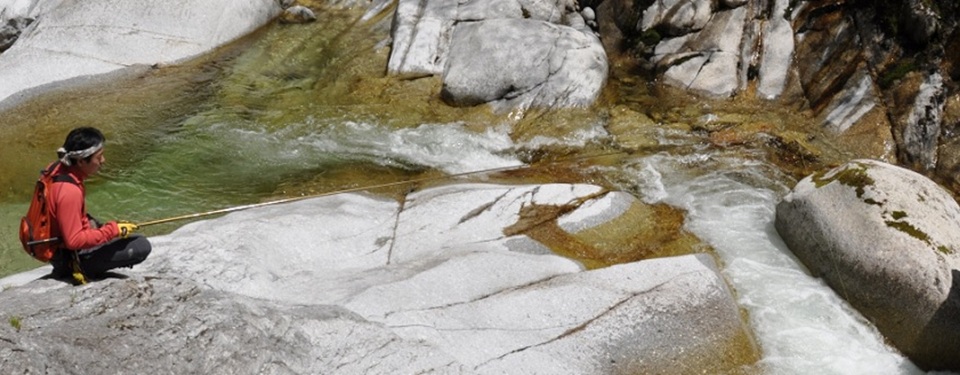
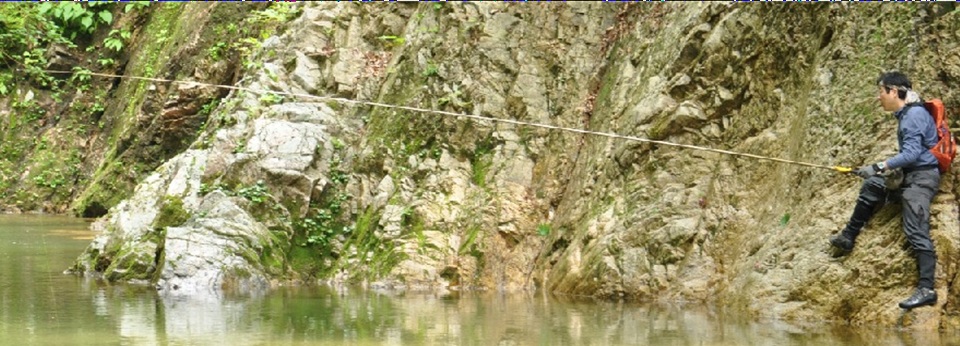
Back in 2017-2018, I was drinking from a firehose to learn everything I could about Tenkara and Keiryu fishing. Admittedly here in the USA (and in Japan too!) fixed line fishing has greatly evolved. But here are pictures that the “Nisshin Tenkara and Keiryu Rod Shop” had on their website to display (that, and) how their collapsible “Mountain Stream” (Keiryu) rods were being used in Japan to fish mountain streams in steep, narrow canyons without overhead casting room with bait and 4’ - 6’ weighted Tenjo lines.
It’s not really a question of “when,” it’s more a question of “who?” Fly tyers will tie and use bead head flies. Anglers who don’t tie flies will use soft plastics. Plus, it generally isn’t a question of what to use when live bait isn’t available. Most of the people who use flies or plastics will not use live bait, period.
The question of what would a bait fisherman use if he can’t get bait is one I have never considered. I don’t fish salt water, and for fresh water you can always get bait. Let Them Eat Steak was written with micro fishing in mind, but when I was a kid there was a local pond that was stocked with trout and also held sunfish, bass, crappies and bullheads. Guys I knew went to one of the local butchers and bought spleen, and caught a lot of trout with it. I once fished for wipers with a guy who used chicken livers for bait and caught lots of fish. Once when I was fishing in New York’s Central Park, one of the local kids came up to me and suggested I use hot dogs for bait. He happened to be eating one at the time and gave me a small piece of it to use. Sure enough, it worked. Basically, if you have access to a grocery store, you have access to bait for fresh water fish.
That said, one of the reasons behind my Overhand Worm Simplifying Flies II was to provide keiryu (bait) fishermen with a simple “fly” they could legally fish in an “artificials only” stream - one they could tie in a minute with no experience and no tools. It has exceeded my wildest expectations (other than being recognized and adopted by “fly fishermen”). Yes, thin plastic worms (squirmy wormy material) work also but some states consider soft plastics to be bait and prohibit their use in “artificials only” water.
To me, keiryu rods’ greatest strength is not specifically their use in small mountain streams where there is no room to cast a longer line with a shorter rod. Rather, it is their ability to present a natural bait or artificial fly (or a small soft plastic) near the bottom with the most natural drift possible. Using a long (or very long) rod allows you to fish with your line more nearly vertical, minimizing the drag that occurs when the weight used to get to the bottom tries to hang directly under the rod tip. That is why honryu (main stream) rods in Japan often are 8 to 10 meters in length (and why Euro nymphers use the longest rods the FIPS Mouche rules allow). If the rules allowed them to use standard keiryu rods, they would!
Drawing from personal experience with different methods, and observation when sharing the water with fisherman using a variety of tactics, I can generalize that, bait, soft plastics, lures, and flies can each produce optimally and better than the others under certain conditions.
Bait is not always effective. When any fish is keyed onto a certain forage or is an idle “staging” mode, bait can be refused… just as a fly or any lure can.
This is where details matter and we get challenged. Sometimes it can be the smallest tweak in presentation that can make the difference… even with bait.
If we rewind into our memory banks we probably all have experiences in this.
@bummm knowing when to use one over the other and even finding a personal preference, we need to be experts at all disciplines. Most of us will just settle in one area as it is enough of a task to master one. The best fisherman I know are versed in multi disciplines and species. Variety will make you a better angler.
Thanks for the comments everyone. After fishing what I thought was a relatively remote lake yesterday (first time trying a lake with tenkara/keiryu), there was so much trash that I’ve completely ruled out fishing with plastics to avoid contributing to that. Though I imagine that without the treble hooks, they’d snag a lot less. While cleaning up I did find a few soft plastics I was able to rig up to my keiryu rod to test out and wasn’t convinced it was worthwhile over my nymphs and weighted flies. I didn’t get around to foraging for live bait, but, following what was suggested here I did try casting a bobber with a hot dog chunk on the hook. Lol. I’ll probably bring live bait with me next time to try out.
I also brought a kayak but didn’t use it. We were getting a lot of bites near the shore, but only from small 4-6" fish who seemed to hide under the nearby logs and branches. Seems like the bigger ones were hanging out near the middle/bottom as we’d see them jump up out there occasionally.
I imagine kebari flies and weighted nymphs may have been the wrong lures to cast if targeting larger fish in a stocked lake, too? Trying to evaluate what I could have done to have better luck next time and would appreciate any input. We had fished until around sundown, when the fish became very active and feeding on the surface.